Have you noticed how fast artificial intelligence is moving lately? One minute, we’re all amazed by chatbots writing our grocery lists and generating funny images of cats in space. The next minute, we are staring down the darker, much more damaging side of this technology.
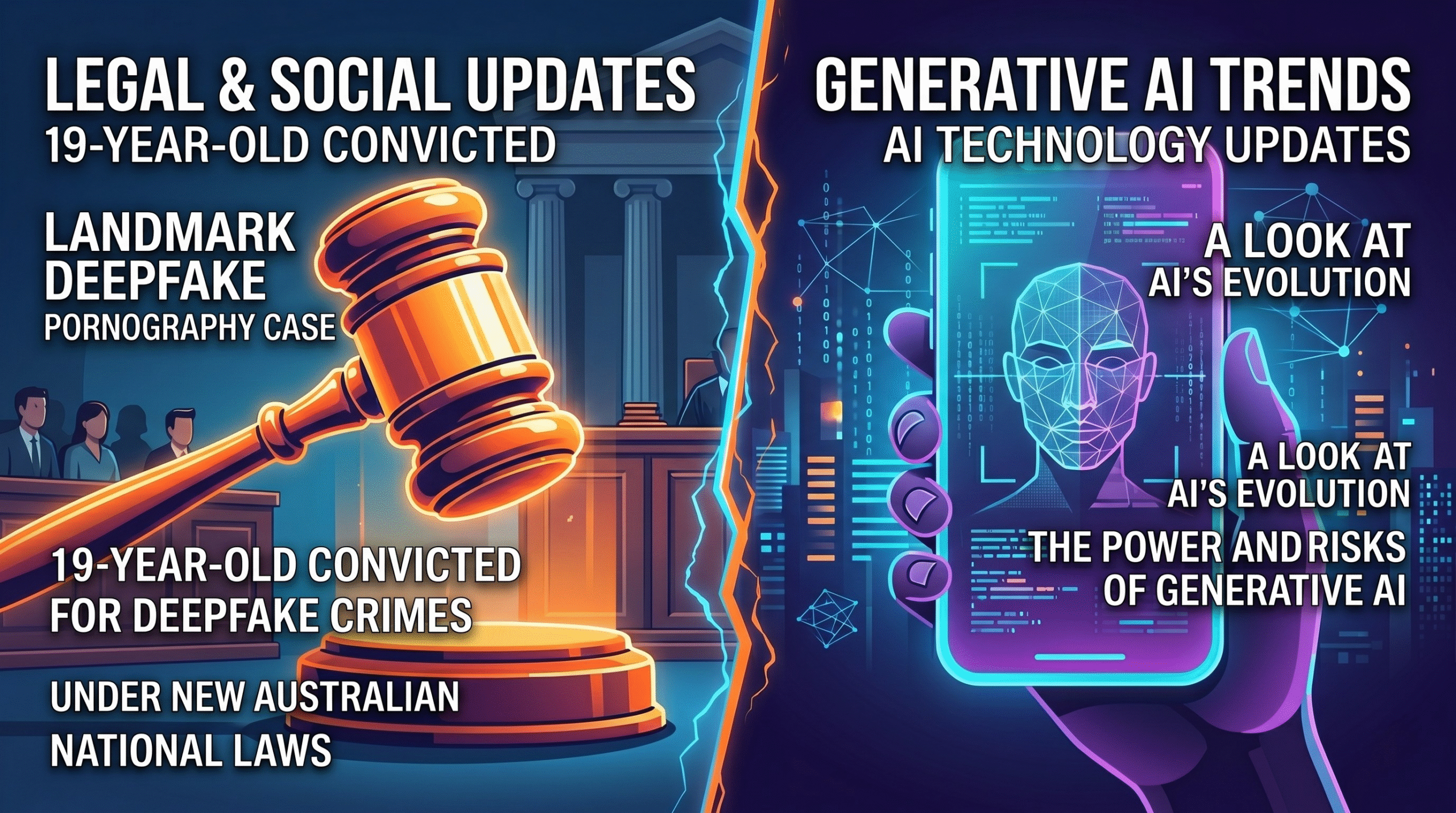
Recently, a massive legal and social milestone was reached in Australia: a 19-year-old was convicted for creating and distributing deepfake pornography. This isn’t just another news headline—it is a landmark case that tests the boundaries of Australia’s newly minted national laws against digital and image-based abuse.
If you are wondering how we got here, what the laws actually say, and what this means for the future of our digital lives, you are in the right place. Let’s break down this complex issue in a simple, conversational way.
The Case That Shook the Nation
Imagine scrolling through your phone and suddenly finding highly explicit images or videos of yourself—except you never took them. You’ve never even been in those situations. Yet, there they are, looking incredibly real, being shared around your school, your workplace, or the internet at large.
This was the terrifying reality for the victims in this recent Australian case. A 19-year-old used accessible, off-the-shelf Generative AI tools to take everyday, innocent photos of women and girls—often from their public social media profiles—and “digitally undressed” them or placed their faces onto explicit content.
Before the recent legal updates, this kind of behavior existed in a frustrating legal gray area. Police and victims often hit a wall because the images technically weren’t “real,” making it hard to prosecute under traditional revenge porn laws. But this time, the outcome was different. Under Australia’s new national legislation, the teenager was not just given a slap on the wrist; he faced severe criminal consequences.
Key Takeaways from the Case:
- Age is No Excuse: The conviction proves that being a teenager or a young adult does not shield you from the severe legal consequences of digital abuse.
- Tech is Accessible: The perpetrator didn’t need to be a master hacker. Today’s AI tools make this incredibly easy, which is exactly why the law had to step in.
- The Harm is Recognized: The court system officially recognized that the damage caused by these fake images is just as devastating as if the images were real.
Understanding the Technology: What Exactly is a Deepfake?
Before we dive into the laws, let’s quickly talk about the tech. “Deepfake” is a blend of “deep learning” and “fake.” It refers to synthetic media where a person in an existing image or video is replaced with someone else’s likeness using artificial intelligence.
In the context of Generative AI, you don’t even need to swap a face on an existing video anymore. Some tools allow users to simply type in a prompt or upload a clothed photo, and the AI will generate a hyper-realistic, explicit image from scratch.
Why is this so dangerous?
- Hyper-Realism: To the untrained eye, these images look 100% real.
- Speed and Scale: Hundreds of images can be generated in a matter of minutes.
- Weaponization: It turns ordinary photos (like a smiling profile picture on Instagram) into weapons of humiliation and harassment.
Australia’s New Rulebook: The Law Explained
So, what exactly changed that allowed this 19-year-old to be convicted?
In 2024, the Australian government introduced the Criminal Code Amendment (Deepfake Sexual Material) Bill. This was a direct response to a massive outcry from victims, advocates, and the eSafety Commissioner, who saw a skyrocketing trend in AI-generated abuse.
Here is a simple breakdown of what these new national laws entail:
- Sharing is a Crime: It is now a serious criminal offense to share sexually explicit material depicting adults without their consent using technology like a smartphone or the internet. It does not matter if the image is real or AI-generated.
- Heavy Penalties: If you share a deepfake, you can face up to six years in prison.
- Aggravated Offenses for Creators: If you are the person who created the deepfake and you share it, the penalty jumps up to seven years in prison.
- Focus on Consent, Not Reality: The law elegantly bypasses the “but it’s fake” defense. The crime is about the violation of consent and the intent to distribute sexualized imagery of a person without their permission.
By establishing these laws, Australia sent a very loud message to the rest of the world: Image-based abuse is a severe crime, regardless of how the image was made.
The Real-World Toll on Victims: “Fake Images, Real Trauma”
One of the biggest misconceptions we need to gently correct is the idea that “because the image isn’t real, it shouldn’t hurt.”
Let’s ground ourselves in reality and empathy here. When a victim discovers a deepfake of themselves, the psychological impact is profound and devastating. Even if the victim knows it’s fake, the people viewing it might not. And even if everyone knows it’s fake, the sheer violation of having one’s likeness manipulated into a degrading, sexualized context is traumatizing.
The psychological impacts include:
- Severe Anxiety and Paranoia: Victims often feel like they can never show their face in public again. They worry about who has seen the images and who might bring them up.
- Loss of Agency: Having your face manipulated without your permission strips away your control over your own body and digital identity.
- Reputational Damage: Even after an image is debunked as a fake, the digital footprint can remain. Victims worry about future employers, partners, or family members stumbling across the content.
- The Chilling Effect: Many young women and girls end up deleting their social media presence entirely, silencing themselves and withdrawing from digital spaces just to stay safe.
This is why this 19-year-old’s conviction is so vital. It validates the victims’ pain. It tells them, “We see your trauma, we agree that this is an attack on your dignity, and the law is on your side.”
Why This Landmark Conviction Matters
This conviction isn’t just a win for the specific victims involved in this case; it sets a massive precedent. Here is why it is a game-changer:
- It Destroys the “Prank” Defense: For a long time, young perpetrators tried to pass off deepfakes as “jokes” or “edgy humor.” A criminal conviction with the threat of prison time completely dismantles that excuse. It classifies the act as deliberate abuse.
- It Empowers Law Enforcement: Police now have a clear, actionable legal framework to follow. They don’t have to shrug and say, “There’s nothing we can do.” They can seize devices, track IP addresses, and press serious charges.
- It Acts as a Massive Deterrent: Teenagers and young adults who might be tempted to use these AI tools out of curiosity, spite, or peer pressure now have a very real, life-altering consequence to consider. A criminal record for sexual offenses will ruin your future career, travel opportunities, and social standing.
- It Sets a Global Standard: Other countries are watching Australia. As digital borders are practically non-existent, having a nation successfully prosecute AI abuse creates a blueprint for places like the US, UK, and European Union to follow suit.
What This Means for Generative AI and Tech Companies
We can’t talk about the perpetrator without also looking at the tools they used. This case is putting a massive spotlight on tech companies and developers who create Generative AI platforms.
For a long time, the tech industry operated under a “move fast and break things” motto. But when the things being broken are people’s lives and reputations, that motto is no longer acceptable.
What needs to change in the tech world?
- Stricter Guardrails: AI developers must build stronger safety filters that prevent their tools from generating non-consensual explicit content. If a user tries to create one, the system should block it immediately.
- Watermarking and Traceability: Technologies like digital watermarking (such as Google’s SynthID) are becoming essential. If an image is AI-generated, it should carry an invisible code that identifies its origin, making it easier for law enforcement to track down the creator.
- Accountability for App Stores: Platforms like Apple and Google need to be more aggressive in removing malicious “deepfake” or “undressing” apps from their stores. Hosting these apps makes the platforms indirectly complicit in the abuse.
How to Protect Yourself and What to Do If You’re a Victim
While the law is catching up, we still need to be proactive about our digital safety. If you or someone you know ever falls victim to this kind of digital abuse, it is crucial to know your rights and your next steps.
Proactive Safety Tips:
- Check Your Privacy Settings: While it won’t stop everything, keeping your social media profiles private and limiting who can see your high-resolution photos reduces the pool of images a bad actor can steal.
- Think Before You Post: Be mindful of what you put online, understanding that once it’s on the internet, it can be screenshotted or saved.
- Educate the Youth: Parents and educators need to have open, honest conversations with teenagers about digital consent. It needs to be clear that making these images is not a joke—it’s a crime.
Steps to Take if You Are Targeted:
- Do Not Delete the Evidence: It is your first instinct to delete the messages or the posts, but don’t. Take screenshots. Record URLs, usernames, and timestamps. You need this for the police.
- Do Not Engage with the Perpetrator: If someone is blackmailing you or sending you these images, do not negotiate with them. Block their accounts immediately.
- Report to the Platform: Use the reporting tools on Instagram, X (formerly Twitter), TikTok, or wherever the image is hosted to get it taken down.
- Report to Authorities: In Australia, you can report the incident directly to the eSafety Commissioner. They have the power to compel tech companies to remove the content quickly. Following that, take your collected evidence to the police.
- Seek Support: You do not have to go through this alone. Reach out to mental health professionals, support hotlines, and trusted friends or family. The shame belongs to the perpetrator, not you.