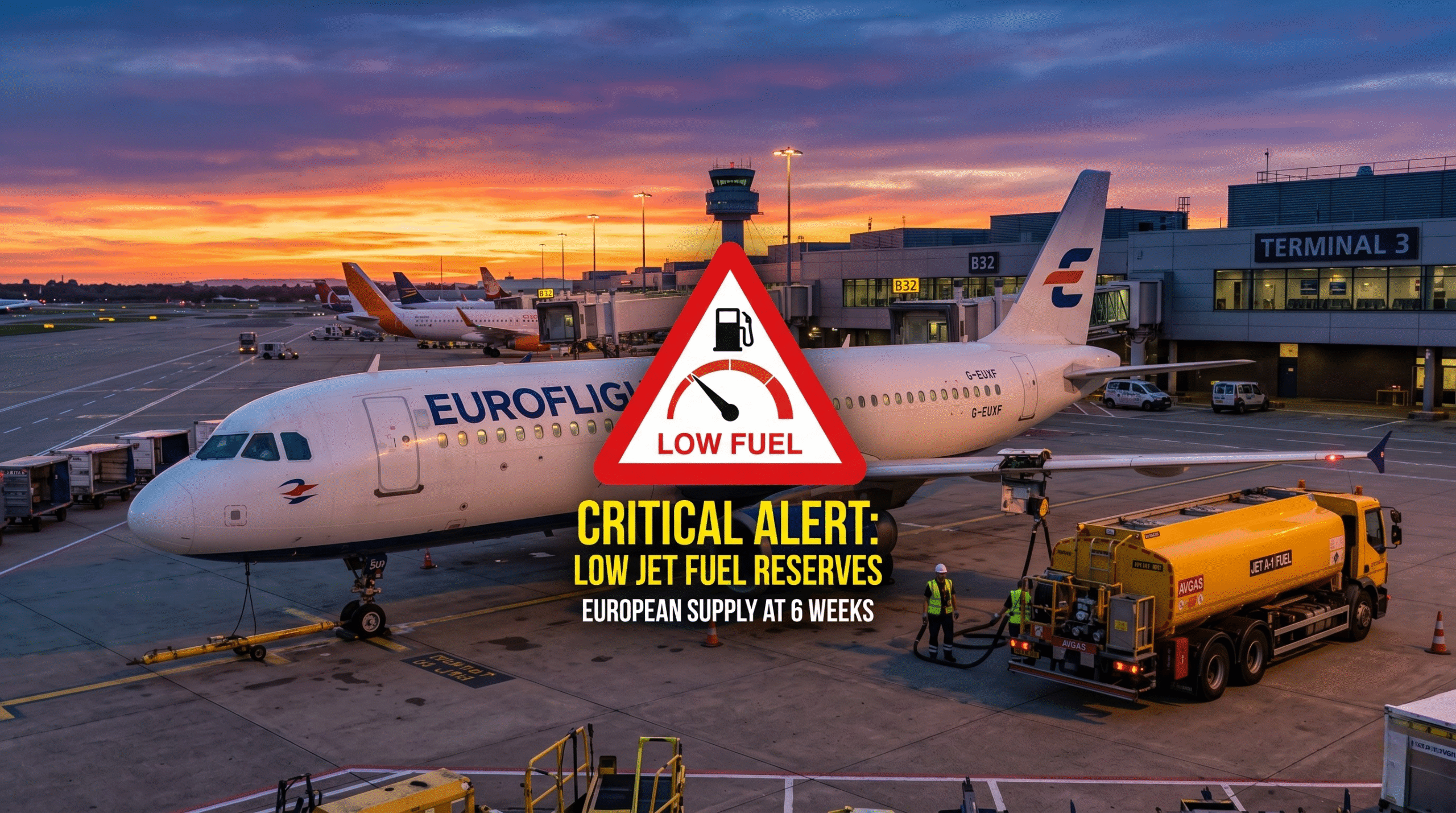
Imagine checking your flight status only to find out the plane isn’t delayed because of weather or maintenance, but because there simply isn’t any gas in the tank. Not just for your flight, but for the entire continent.
Recently, energy experts and industry bosses have sounded a massive alarm: Europe might only have about six weeks of jet fuel left in its immediate reserves.
If that sounds like the plot of a disaster movie, you’re not alone. But before you cancel your summer holiday to Greece or your business trip to Berlin, let’s break down what is actually happening, why it’s happening, and what it means for your wallet and your travel plans.
Why the “Six Weeks” Warning is Making Waves
When an “energy boss” speaks, the markets listen. The warning isn’t necessarily saying that every airport will go bone-dry in 42 days, but rather that the buffer—the safety net of fuel kept in storage—is hitting critically low levels.
- The Tightrope Walk: Most regions operate on a “just-in-time” delivery system.
- The Threshold: Once reserves drop below a certain point, any small disruption (like a strike or a broken pipeline) can cause a total system failure.
- The Panic Factor: Shortage warnings often lead to price hikes, as airlines scramble to lock in whatever fuel is left.
The Perfect Storm: How Did We Get Here?
It wasn’t just one thing that caused this. It’s a “perfect storm” of geopolitical tension, economic shifts, and logistical nightmares.
- Geopolitical Tensions: Ongoing conflicts in Eastern Europe and the Middle East have disrupted traditional supply routes.
- Refinery Shortages: Europe has been closing down older oil refineries to meet green energy goals, but the new “clean” infrastructure isn’t fully ready to pick up the slack.
- Import Dependency: Europe relies heavily on fuel imported from Asia and the Middle East. If ships have to take longer routes (like going around Africa to avoid the Red Sea), the “six-week” supply line gets stretched thin.
- Post-Pandemic Boom: Everyone wants to travel again. Demand for flights is at an all-time high, but the supply of fuel hasn’t kept pace with our collective wanderlust.
How This Hits Your Pocket: The Ripple Effects
You might think, “I don’t own a plane, so why do I care?” Unfortunately, the fuel crisis trickles down to almost everything.
1. Sky-High Ticket Prices
Fuel is usually the single biggest expense for an airline. When jet fuel becomes scarce, it becomes expensive.
- Surcharges: Expect to see “fuel surcharges” added to your booking.
- Dynamic Pricing: As supply drops, the remaining seats on fueled planes will go to the highest bidder.
2. Flight Cancellations and Consolidations
Airlines won’t fly half-empty planes if fuel is precious.
- They might merge two flights into one.
- Less profitable routes (smaller regional airports) might be cut entirely.
3. Global Trade Slowdown
A huge amount of high-value cargo (electronics, medicine, fresh food) moves in the belly of passenger planes. If planes don’t fly, your “overnight shipping” becomes “next-week shipping.”
Is There a Solution? (The “Green” Silver Lining)
While the current news is stressful, it’s forcing the industry to move faster on alternatives. This crisis might be the “kick in the pants” the world needs to prioritize:
- SAF (Sustainable Aviation Fuel): Made from cooking oil, plant waste, or even captured CO2.
- Rail Alternatives: Europe already has a great train network; this might push more people to “fly-less” and “train-more.”
- Strategic Stockpiling: Governments are now looking at ways to mandate larger fuel reserves to prevent future scares.
What Should Travelers Do?
If you have travel plans in the next few months, don’t panic, but be prepared.
- Book Early: Lock in your prices now before further hikes.
- Travel Insurance: Make sure your policy covers “travel disruption” or “airline insolvency.”
- Stay Flexible: Keep an eye on your email for schedule changes.
The Bottom Line
The “six weeks” warning is a wake-up call for a continent that has taken easy travel for granted. While it’s unlikely that all planes will stop flying tomorrow, the era of “dirt-cheap” flights across Europe might be taking a temporary (or permanent) backseat to energy reality.
Why the “Six Weeks” Figure is Critical:
- Inventory Levels: It refers to the days of cover (DoC). Standard safety levels are usually 60–90 days. Dropping to 42 days (6 weeks) is considered a “Red Zone.”
- Logistics Lag: It takes about 3–4 weeks for a tanker from the Middle East to reach European ports. If there is a delay in shipping, a 6-week reserve leaves zero room for error.
- Refining Margins: The cost to turn crude oil into jet fuel (the “crack spread”) has skyrocketed, making it less profitable for refineries to produce jet fuel over diesel or gasoline.
Impact on Specific Regions:
- UK and France: Highly dependent on imports; likely to see the fastest price increases.
- Germany: Relying on aging pipeline infrastructure which complicates moving fuel from ports to inland airports like Frankfurt.
- Eastern Europe: Most vulnerable to supply chain shifts due to the proximity of the conflict in Ukraine.
The Role of Sustainable Aviation Fuel (SAF):
- Current Availability: SAF currently makes up less than 1% of global jet fuel.
- Scaling Issues: While it’s a great solution, it currently costs 3x to 5x more than traditional kerosene.
- Mandates: The EU is mandating 2% SAF usage by 2025, but this isn’t enough to fill the gap left by a traditional fuel shortage.