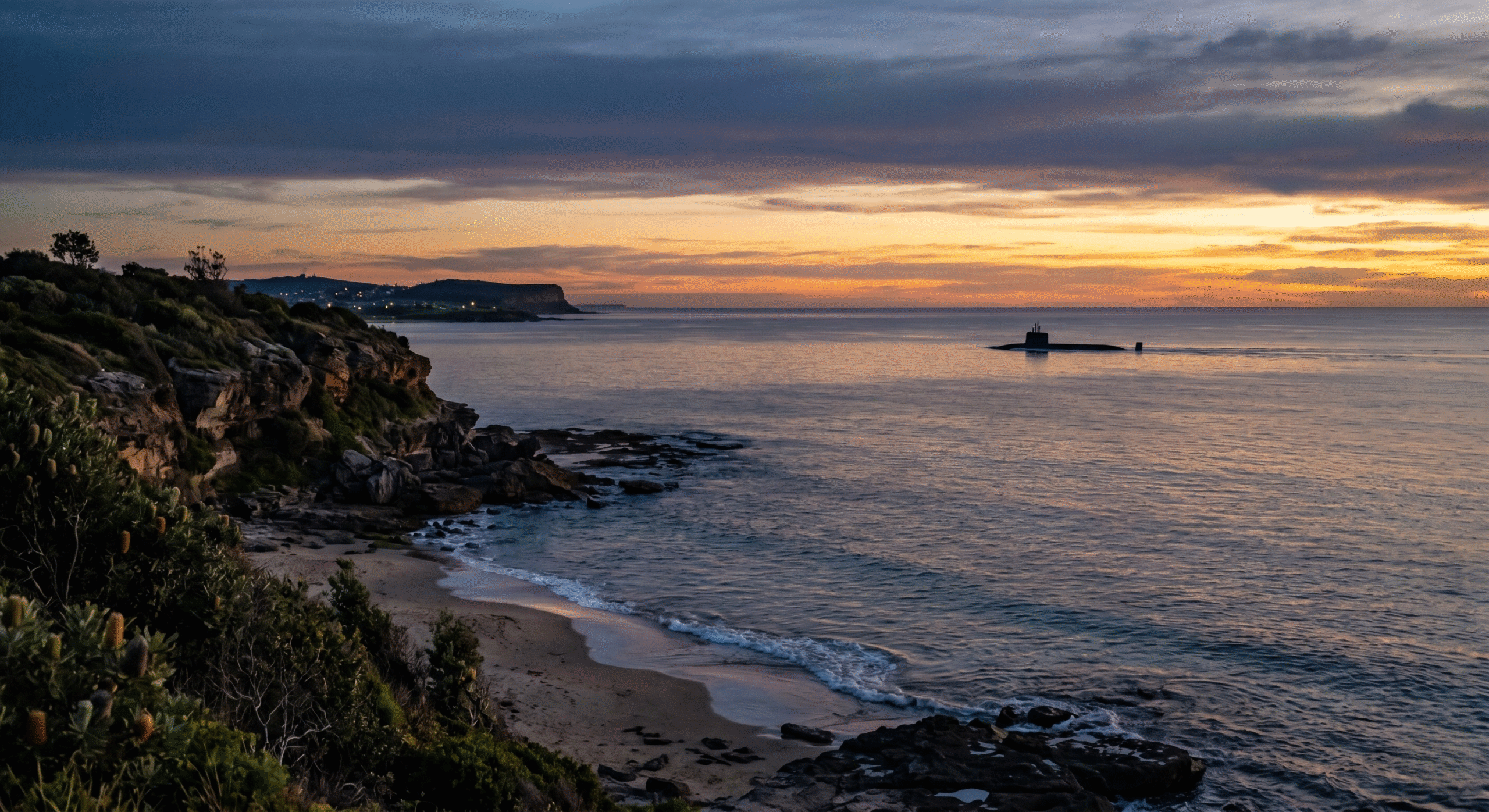
Imagine waking up, pouring yourself a cup of coffee, looking out over the beautiful New South Wales coastline, and realizing your quiet town might just become the number one target for an international military adversary.
It sounds like the plot of a Hollywood political thriller, right? Unfortunately for the residents of Port Kembla, it’s not a movie. It’s a very real possibility.
Recently, highly classified New South Wales government documents were dragged into the spotlight, and they revealed a massive secret: Port Kembla is the preferred east coast base for Australia’s highly anticipated (and highly controversial) nuclear submarine fleet.
Let’s dive into what these secret documents actually say, why this specific location was chosen, and why the local community is gearing up for the fight of their lives.
The Big Reveal: What Do the Secret Documents Say?
For months, there has been a swirling storm of speculation regarding where Australia will park its shiny, new, multi-billion-dollar nuclear submarines. Rumors bounced between Brisbane, Newcastle, and Port Kembla.
However, the speculation is largely over. Thanks to documents tabled in the NSW parliament—brought to light by an order to produce from Greens MLC Abigail Boyd—we now know what the government has been discussing behind closed doors.
Here are the key takeaways from the leaked cabinet office and premier’s department documents:
- The Top Pick: Port Kembla, situated just 75 kilometers south of Sydney, is the definitive frontrunner and preferred East Coast Base (ECNB).
- The Big Risk: The documents openly acknowledge that building the base here would make the area a “target for Australian military adversaries.”
- Public Backlash: The government is fully aware that this decision will face “fierce public resistance.”
Why Port Kembla? The Strategy Behind the Secret
You might be wondering, why Port Kembla? Out of all the sprawling coastlines in Australia, why pick a spot just a short drive from the nation’s biggest city?
While the documents focus heavily on the risks, military strategists look at Port Kembla and see a logistical goldmine:
- Deep Water Access: Nuclear submarines are massive. They require deep natural harbors to maneuver safely without being detected, and Port Kembla fits the bill.
- Existing Infrastructure: Port Kembla is already an industrial powerhouse. It has a massive commercial port, steelworks, and a workforce accustomed to heavy industry. Upgrading this to a military standard is theoretically easier than building from scratch.
- Proximity to Sydney: Being 75km away from Sydney means it is close enough to tap into the city’s vast resources, supply chains, and defense networks, but just far enough away to not clog up Sydney Harbour.
The Elephant in the Room: Becoming a “Military Target”
The most chilling line in the entire government analysis is this one: “In the event of a military conflict, the ECNB could be a target for Australian military adversaries.”
Let’s break that down in plain English.
Australia is investing in nuclear-powered submarines as part of the AUKUS security pact (alongside the US and the UK) to project power in the Indo-Pacific region. These subs are designed to be stealthy, lethal, and capable of traveling vast distances without surfacing.
Because these submarines are such high-value strategic assets, wherever they are docked automatically becomes a high-value strategic target. If a major global conflict were to break out, disabling an enemy’s submarine fleet would be priority number one. By hosting the base, Port Kembla would essentially have a giant bullseye painted on it.
For the people who live, work, and raise their kids in the Illawarra region, this is a terrifying prospect. Nobody wants to feel like they are living in the crosshairs of a geopolitical tug-of-war.
Nuclear Fears: More Than Just a Military Threat
But it’s not just the threat of a foreign attack that has people on edge. It’s the word nuclear.
It is crucial to understand that these submarines will not carry nuclear weapons. They are armed with conventional weapons. However, they are powered by nuclear reactors. And not just any reactors—they are fueled by highly enriched uranium.
The NSW government documents completely understand the psychological and environmental fears this brings up. The analysis states:
“Residents are likely to perceive the east coast nuclear base as a source of risk due to there being nuclear reactors on board… NSW residents may perceive the ECNB similarly to a nuclear power station as a source of environmental disaster risk.”
Here is why the locals are worried:
- The “Chernobyl/Fukushima” Factor: Even though naval nuclear reactors have an incredibly safe track record historically, the general public associates nuclear power with catastrophic meltdowns.
- Environmental Impact: What happens to the local marine life? Will there be dredging? What if there is a tiny leak of radioactive material into the beautiful local waters?
- Waste Management: Where does the radioactive waste go? How is it transported? These are questions the government still hasn’t fully answered to the public’s satisfaction.
Fierce Resistance: The Battle Ahead
The government documents hit the nail on the head when they predicted “fierce public resistance.” They knew exactly what they were getting into, which is likely why this information was kept under wraps for so long.
Now that the cat is out of the bag, we can expect the resistance to organize quickly and loudly.
What will this resistance look like?
- Community Protests: Expect to see massive rallies. The people of the South Coast have a long history of unionism and community organizing. They won’t take this lying down.
- Plummeting Property Anxieties: Homeowners are going to be furious. Who wants to buy a luxury beach house next to a prime military target housing highly enriched uranium? There will be widespread fears of property values taking a massive hit.
- Political Fallout: Local politicians, regardless of their party, will be forced to choose between backing the federal government’s defense strategy or standing with their angry constituents. It’s political poison.
The Big Picture: National Security vs. Local Safety
This whole situation perfectly captures one of the hardest dilemmas in modern governance: the clash between national security and local safety.
On a federal level, the government argues that Australia desperately needs these nuclear-powered submarines to protect its shipping routes, defend its borders, and maintain a balance of power in an increasingly tense global environment. They argue that this base is for the good of the entire country.
But on a local level, the residents of Port Kembla are being asked to shoulder 100% of the risk. They are the ones who have to live next to the uranium. They are the ones who have to live in a designated “military target” zone.
Is it fair to ask one community to carry that burden for the rest of the nation?