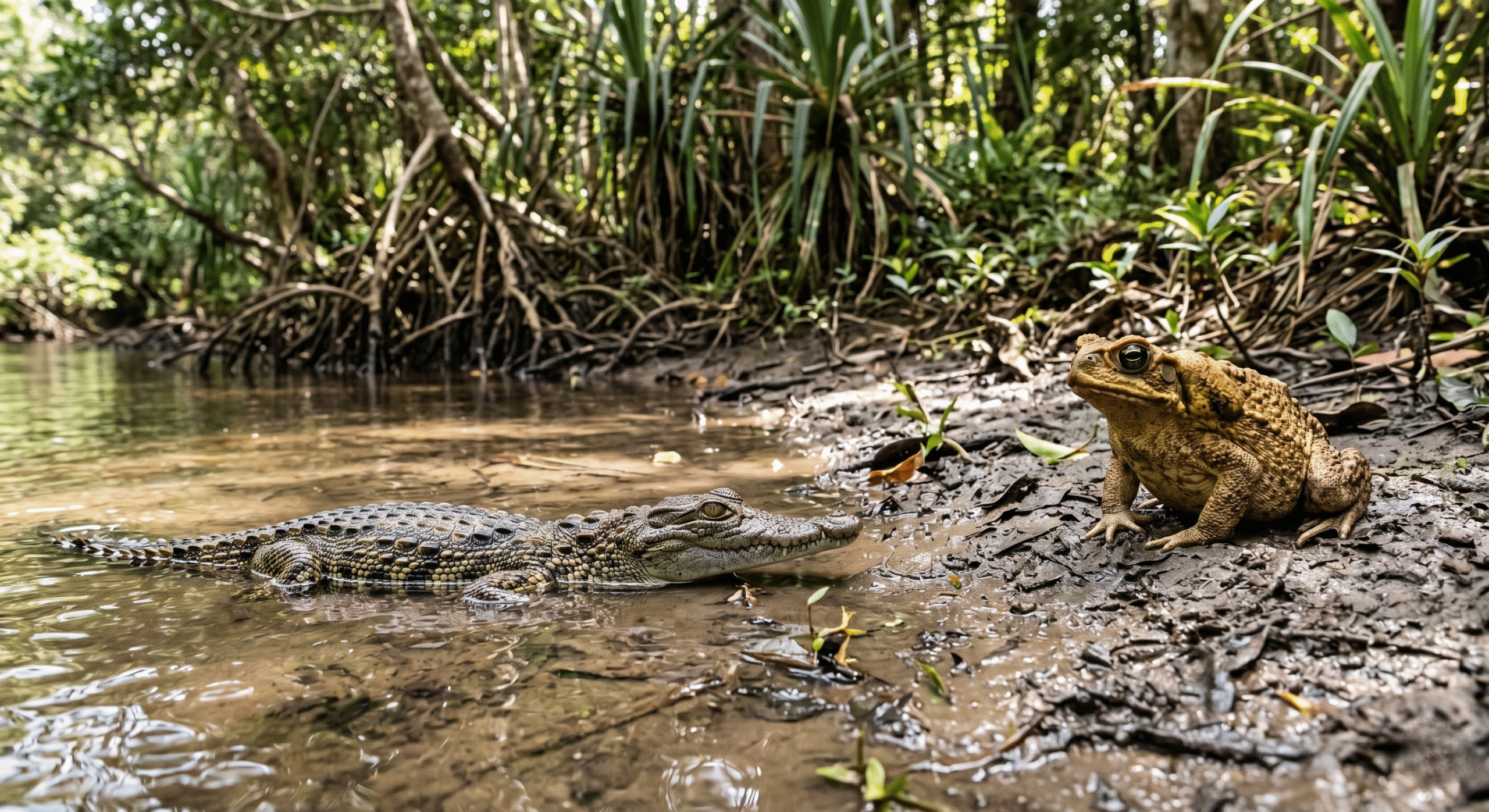
Australia’s invasive cane toads are notorious for causing chaos in the local ecosystem. With highly toxic poison glands on their shoulders, they are a deadly snack for most native predators. But nature has a funny way of fighting back!
Thanks to the sharp eyes of a local tour guide, we now know that juvenile saltwater crocodiles (affectionately called “salties”) have figured out a brilliant way to put cane toads on the menu safely.
Here is everything you need to know about this amazing discovery.
A Tour Guide’s Sharp Eye
- The Discovery: Aussie tour guide David White first noticed this bizarre behavior about two decades ago in the Daintree River.
- The Proof: He recently uploaded his photos to iNaturalist, an app for nature enthusiasts.
- The Follow-Up: Because David knows the local crocs so well, he was able to track the unique markings on the little crocodiles. He proved that the exact same baby crocs who ate the toads were alive and thriving long after their toxic meal!
Why Is This Such a Big Deal?
- Freshwater Crocs Usually Die: Previous studies showed that freshwater crocodiles were dying after accidentally eating these toxic invaders.
- Missing Evidence: Until now, scientists only had rumors that adult saltwater crocodiles could survive eating a toad. Nobody knew for sure if the babies (juveniles) could handle the poison.
- Five Confirmed Cases: David’s observations provided solid proof of five separate cases where baby salties ate the toads with zero ill effects. Crocodile farms have also backed this up, noticing their salties occasionally snack on toads without getting sick.
The Croc’s Brilliant “Washing Machine” Trick
So, how are these little guys surviving a meal that kills other predators? It comes down to a clever eating habit!
- Thrashing in the Water: When a saltwater croc catches a cane toad, it holds the toad in its mouth for a long time and fiercely thrashes it around in the water.
- Washing Away the Poison: The attack stresses the toad out, causing it to squeeze venom out of its shoulder glands. Because the croc is thrashing it around in the river, the water literally washes the poison away!
- A Safe Snack: By taking their time and washing their food, the crocodiles dilute the poison, making the toad completely safe to swallow.