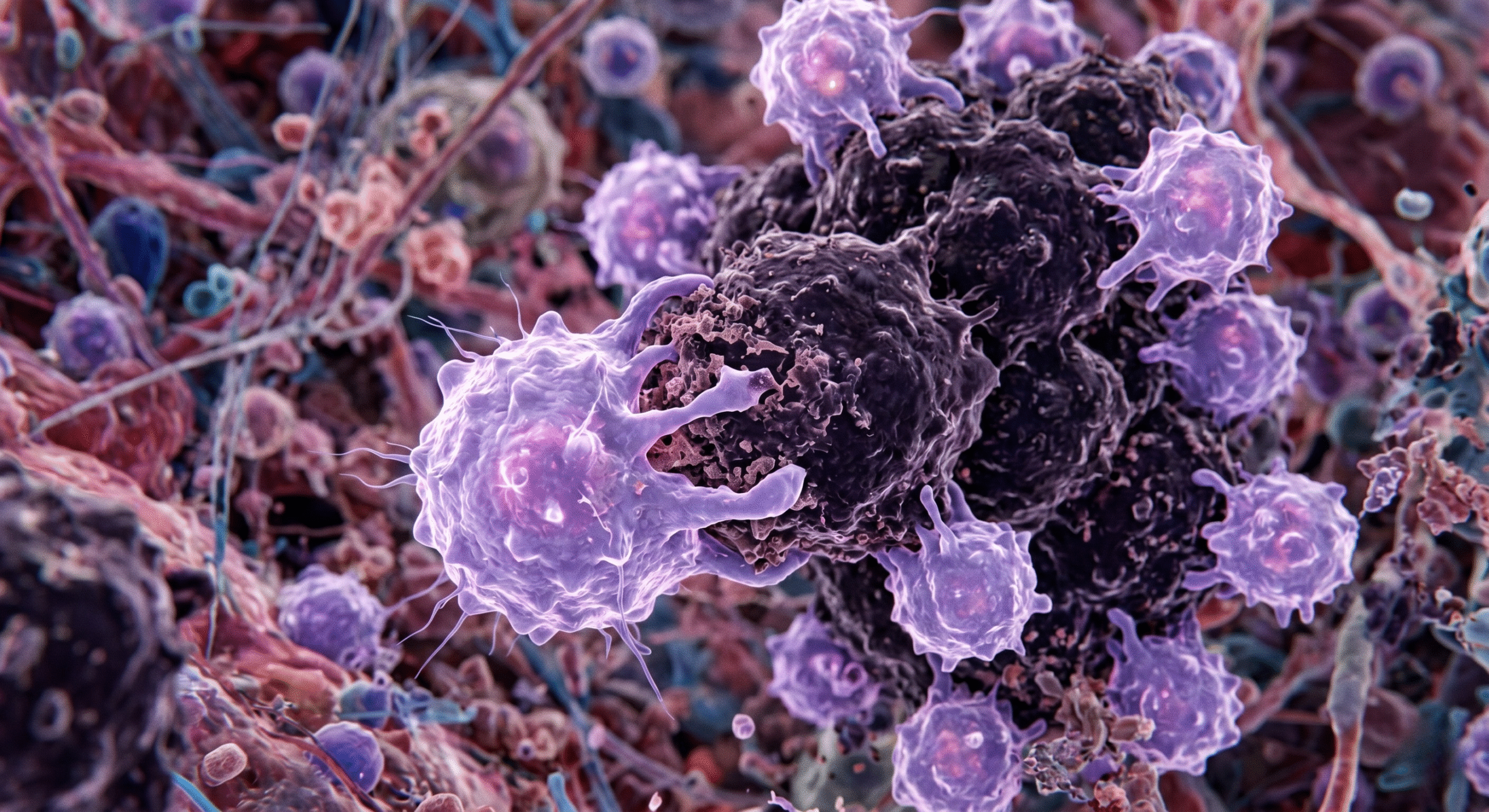
Our bodies are basically walking sci-fi movies, and scientists just captured one of the most incredible action sequences on camera. For the very first time, researchers have recorded real-time video of our immune cells actively eating live skin cancer cells.
Published in the Journal of Experimental Medicine, this breakthrough is changing how we look at the body’s natural defense system. Here is a simple breakdown of what is happening inside the microscopic battlefield.
Meet the Body’s Pac-Man: Macrophages
To understand this discovery, you first need to meet the star of the show: the macrophage.
- What are they? Macrophages are specialized immune cells. Their name literally translates to “big eaters” in Greek.
- What do they do? They act as the body’s cleanup crew. When tissue is damaged or cells die, macrophages swoop in and gobble up the debris in a process called phagocytosis (cell-eating).
- The mystery: Up to 30% of a melanoma (skin cancer) tumor’s mass can be made up of these macrophages. But until now, scientists weren’t entirely sure if they were helping the cancer grow or trying to fight it.
Caught in the Act: Nibbling at the Edges
Using an advanced imaging technique called intravital two-photon microscopy, researchers at the Garvan Institute in Australia finally got their answer. They zoomed in on live melanoma tumors in mice and watched the macrophages go to work.
- The frontline defense: The video showed a specific type of macrophage arranging itself around the outer edges of the melanoma tumor.
- Taking a bite: Instead of just cleaning up dead cells, the researchers watched these macrophages actively nibbling away at the live cancer cells, containing the tumor and slowing its growth.
- Why it’s surprising: This attack happened completely independently of T cells and B cells—the immune cells that normally get all the credit for fighting cancer.
The Big Question: Cleanup Crew or Alarm System?
While seeing immune cells eat cancer is a massive win, it leaves researchers with a massive cliffhanger. What happens after the macrophage eats the cancer cell?
There are two possibilities:
- Silent Disposal: The macrophage might just digest the cancer cell and quietly dispose of the waste, acting purely as a local cleanup crew.
- Raising the Red Flag: Macrophages also have a second job as “immune informants.” After they chew up a threat, they might display a piece of it on their surface. This acts like a biological red flag, signaling the heavier artillery (like T cells) to swarm the tumor and finish the job.