The Unprecedented Pain at the Pump: A National Crisis
- A Daily Financial Shock: For everyday Australian drivers, pulling up to the bowser has transformed from a routine chore into a source of genuine financial anxiety. Families are aggressively monitoring fuel-price apps and rationing their weekly trips just to balance the household budget.
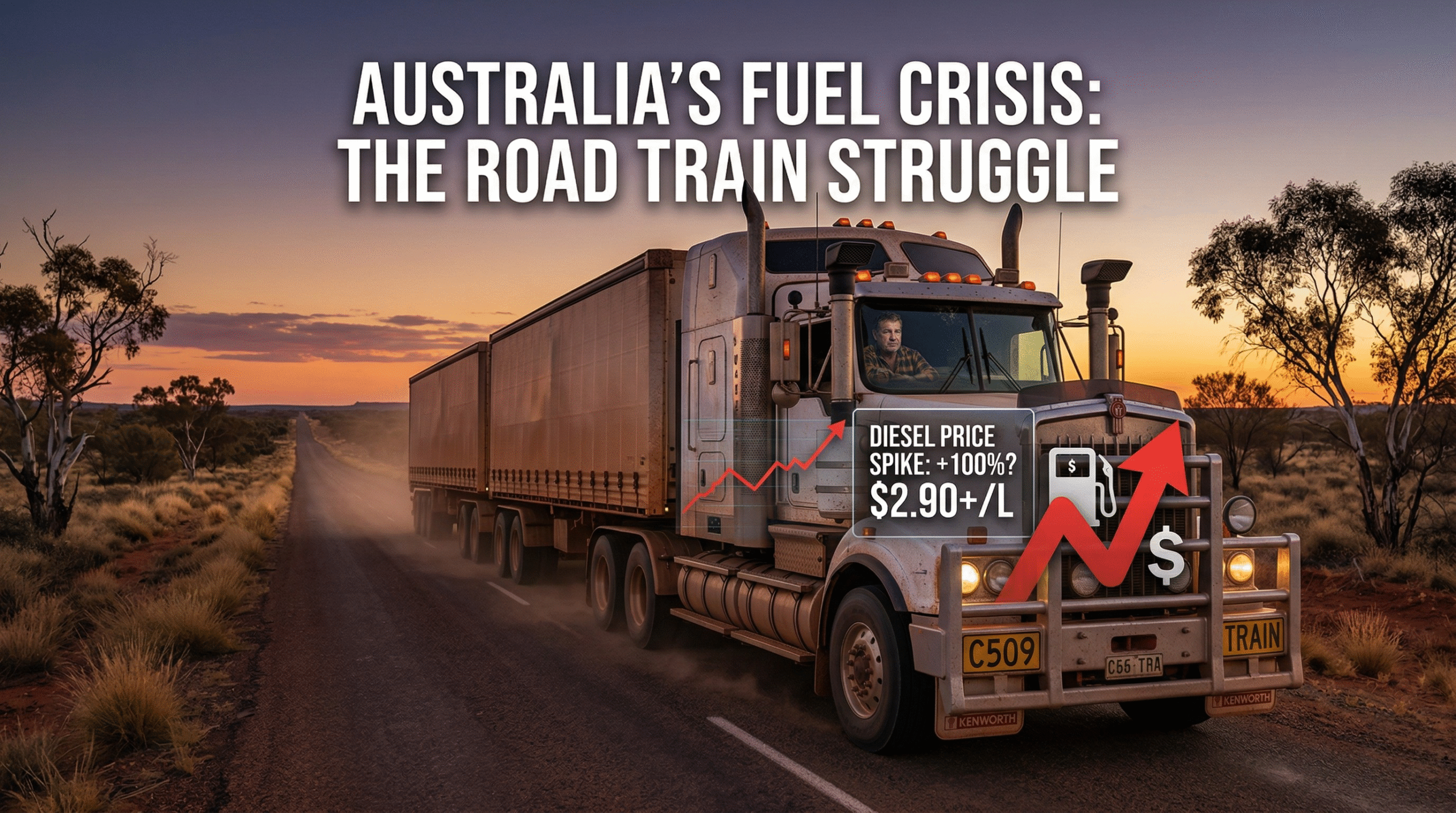
- The Disproportionate Burden: While city commuters might wince at the cost of filling up a hatchback, the vital trucking and lorry industry is bearing a catastrophic financial burden. For these essential workers, fuel isn’t just an errand—it is the absolute lifeblood of their entire livelihood.
- A Vulnerable Infrastructure: The crisis has highlighted Australia’s heavy reliance on imported refined fuels and its relatively small strategic fuel reserves, leaving the nation highly exposed to sudden global market shocks.
The Global Catalyst: How Geopolitics Crushed the Diesel Market
- The Ripple Effects of War: The recent outbreak of war in Iran has destabilized an already fragile global energy market. The Middle East remains a critical artery for global oil supply, and the conflict has triggered panic buying and massive supply chain disruptions.
- Why Diesel Prices are Skyrocketing: Refineries are struggling to keep up with shifting global demands, sending the price of refined diesel to unprecedented, historic highs.
- The Road Train Reality: Australian freight relies heavily on massive, multi-trailer road trains to cross vast outback distances. These mechanical beasts cannot easily transition to electric alternatives and require thousands of liters of diesel per trip.
- Evaporating Profit Margins: Because of the global spike, baseline operating costs for transport businesses have literally doubled overnight. For an industry that already operates on incredibly thin margins, absorbing a 100% increase in fuel costs is mathematically impossible.
The Prime Minister’s Rare National Address
- A Prime-Time Interruption: Highlighting the absolute severity of the crisis, Prime Minister Anthony Albanese took the extraordinary step of interrupting evening television broadcasts for a three-and-a-half-minute national address directly concerning our fuel security.
- A Message of National Unity: Albanese attempted to project calm and resilience, stating, “These are uncertain times. But I am absolutely certain of this: we will deal with these global challenges, the Australian way.”
- The “Think of Others” Mandate: The PM’s core strategy relies heavily on community goodwill. He urged Australians to fundamentally change their daily habits to artificially lower domestic fuel demand.
- The Public Transport Push: He explicitly asked those living in urban centers with access to buses, trains, and trams to leave their personal cars at home. The ultimate goal is to essentially “ration” our limited fuel supplies by saving them for the agricultural workers, emergency services, and truck drivers who have absolutely no alternative.
The Harsh Reality for Small Business Operators
- The Disconnect Between Policy and Reality: While the Prime Minister’s speech was well-meaning and necessary for national morale, public transport initiatives do not offer any immediate financial relief to transport businesses currently drowning in debt.
- A Case Study in Despair: Aaron Fischer: Aaron Fischer, an owner-operator of a local lorry company, is the human face of this economic roadblock. He represents thousands of independent drivers across the country.
- The Burden of Fixed Costs: Even if Aaron parks his trucks to save on diesel, he still has to pay insurance, maintenance, and the massive bank loans on his rigs.
- The Impossible Choice: Aaron spends his nights awake, agonizing over spreadsheets. He is forced to choose between running a freight load at a net financial loss just to keep his clients, or parking his trucks and risking bankruptcy.
The Looming Threat to the Domestic Supply Chain
- The Invisible Backbone of Australia: It is incredibly easy for the average consumer to forget that trucks are the arteries of the nation. They deliver everything: fresh agricultural produce, essential medical supplies, construction materials, and retail goods.
- The Inflationary Spiral: Transport companies cannot absorb these losses forever. Eventually, these massive fuel costs must be passed down the line. If freight costs double, the cost of goods doubles.
- The Threat of Empty Shelves: If independent operators like Aaron are forced into bankruptcy and take their trucks off the road permanently, we won’t just see higher prices—we will see major logistical delays and empty supermarket shelves.
- A Crucial Call for Empathy: The Australian transport industry is currently holding the economy together by a thread while navigating one of the hardest economic roadblocks in modern history. The next time you share the highway with a long-haul truck driver, give them some space and a wave—they are fighting an uphill battle to keep the country moving.
What specific aspect of this crisis would you like to explore next? For example, we could look into the potential government interventions, or the long-term impact on everyday grocery prices.