You’ve done the hard work: you’ve sourced a quality product, found a reliable carrier (that’s us!), and set your price. But many Australian businesses accidentally lose profit right before the item leaves the loading dock—all because of poor packaging.
Packaging isn’t just about keeping your goods safe; it’s the single most important factor that determines your final freight cost. Why? Because of the dreaded Cubic Weight.
At Bali Solutions, we guarantee safe, damage-free transport. But even the best-trained driver can’t fix a box that wasn’t prepared properly. Here are the five most common packaging mistakes we see and how a few simple changes can protect your products and your profit margin.
1. The Cubic Weight Trap: Don’t Ship Air
The majority of logistics companies charge based on the greater of two measurements: the Actual Weight (what the item physically weighs) or the Volumetric Weight (how much space it takes up).
The Mistake: Using an oversized box because it’s what you had handy. That extra air space means you are charged as if the box was full of heavy rocks, even if it’s full of light feathers.
The Fix: Minimise space. Use the smallest possible box for the contents. For small, non-fragile items, consider sturdy, low-profile poly mailer bags instead of a box. If you must use a larger box, fill the empty space with effective, lightweight cushioning (like paper or biodegradable fill) to prevent movement.
2. Boxes Must Be Built for Battle (Australian Roads)
Your package will encounter automated sorting belts, stackers, and long distances. The humble cardboard box needs to be strong enough to withstand the journey.
The Mistake: Reusing old, soft, or damaged boxes, or using single-wall cardboard for loads over 10kg. A compromised box can lose up to 70% of its strength.
The Fix: Invest in new, double-wall corrugated cardboard for loads over 10kg. If you’re sending multiple units, stack them in columns, not interlocking brick patterns, to distribute weight evenly and avoid crushing the lower boxes. For oversized or heavy items, they must be strapped securely to a sturdy, undamaged pallet.
3. The Cushioning Conundrum: Items Should Not Touch
Internal damage usually happens because items move and knock against each other or the exterior walls of the box.
The Mistake: Using only bubble wrap but leaving empty gaps, or simply stuffing old newspaper without adequately securing the item in the centre.
The Fix: Wrap and wedge.
Wrap each item individually (especially fragile goods).
Buffer the item with at least 5cm of cushioning material on all sides.
Wedge materials between items to eliminate all internal movement. Give the box a shake test—if you hear movement, you need more padding.
4. Labelling: Be Clear and Consistent
A poorly printed or positioned label is the quickest way to send your parcel on a detour, adding days and frustration to the delivery time.
The Mistake: Placing the label over a seam, fold, or corner; using blurry or faded ink; or failing to remove old labels when reusing packaging.
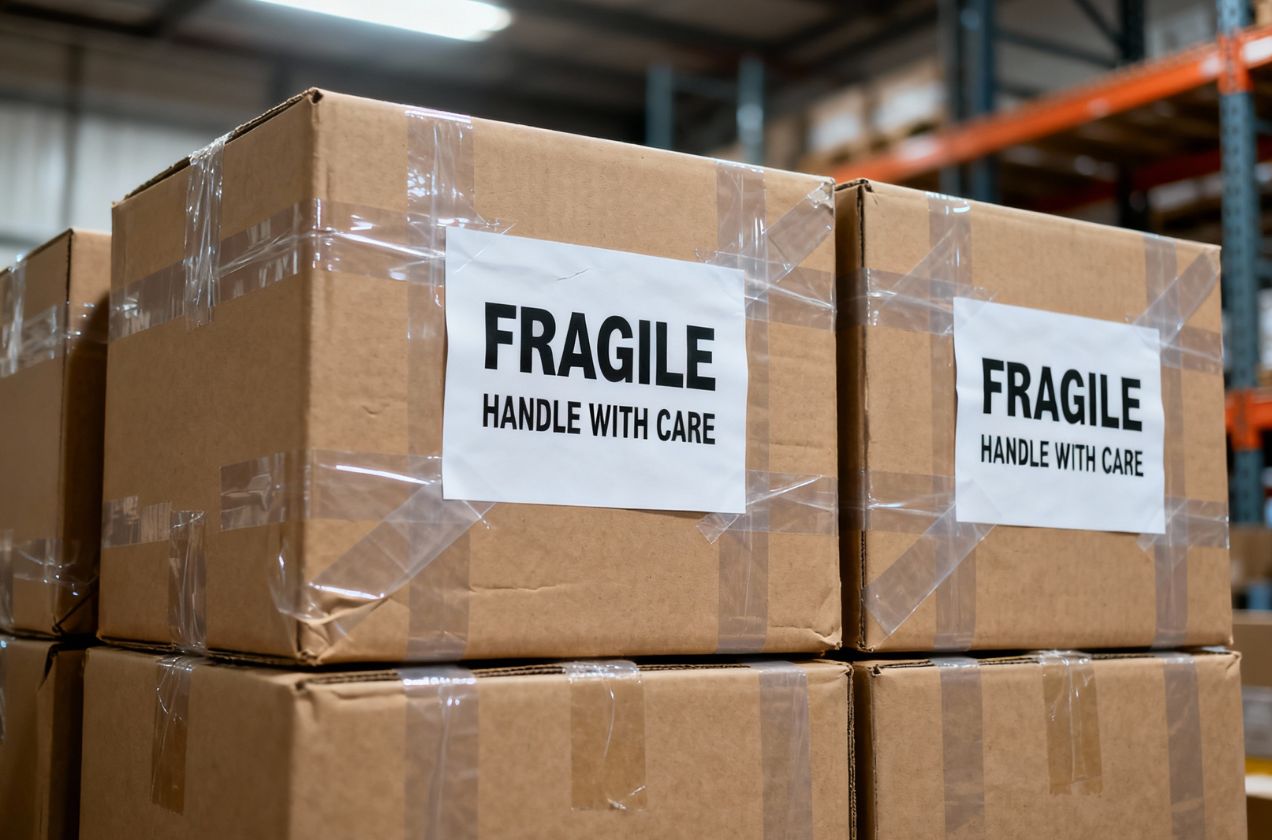
The Fix: Labels must be flat and visible. Place the label on the largest, flattest surface. Use clear black ink on a matte white label and ensure all old labels and barcodes are completely covered or removed. For fragile items, add clearly visible “Fragile” or “Heavy” warnings, but always ensure the packaging itself can withstand the journey.
5. Security and Sealing: The Tape Test
The seal is the weakest point of any box. If it pops open, the contents are exposed and the delivery is compromised.
The Mistake: Using thin, cheap sticky tape or only taping the opening flap.
The Fix: Use strong, pressure-sensitive packing tape (not duct tape or masking tape). Use the H-method of sealing: tape the middle seam and both seams at the ends of the box. For heavier boxes, reinforce the edges with strapping or banding.
At Bali Solutions, we take every step to ensure your goods arrive safely and on time. By following these packaging tips, you are partnering with us to ensure a perfect, stress-free delivery, every single time.
Need help with bulk packaging or securing an unusual item to a pallet? Contact our logistics team for advice or to book your next delivery!