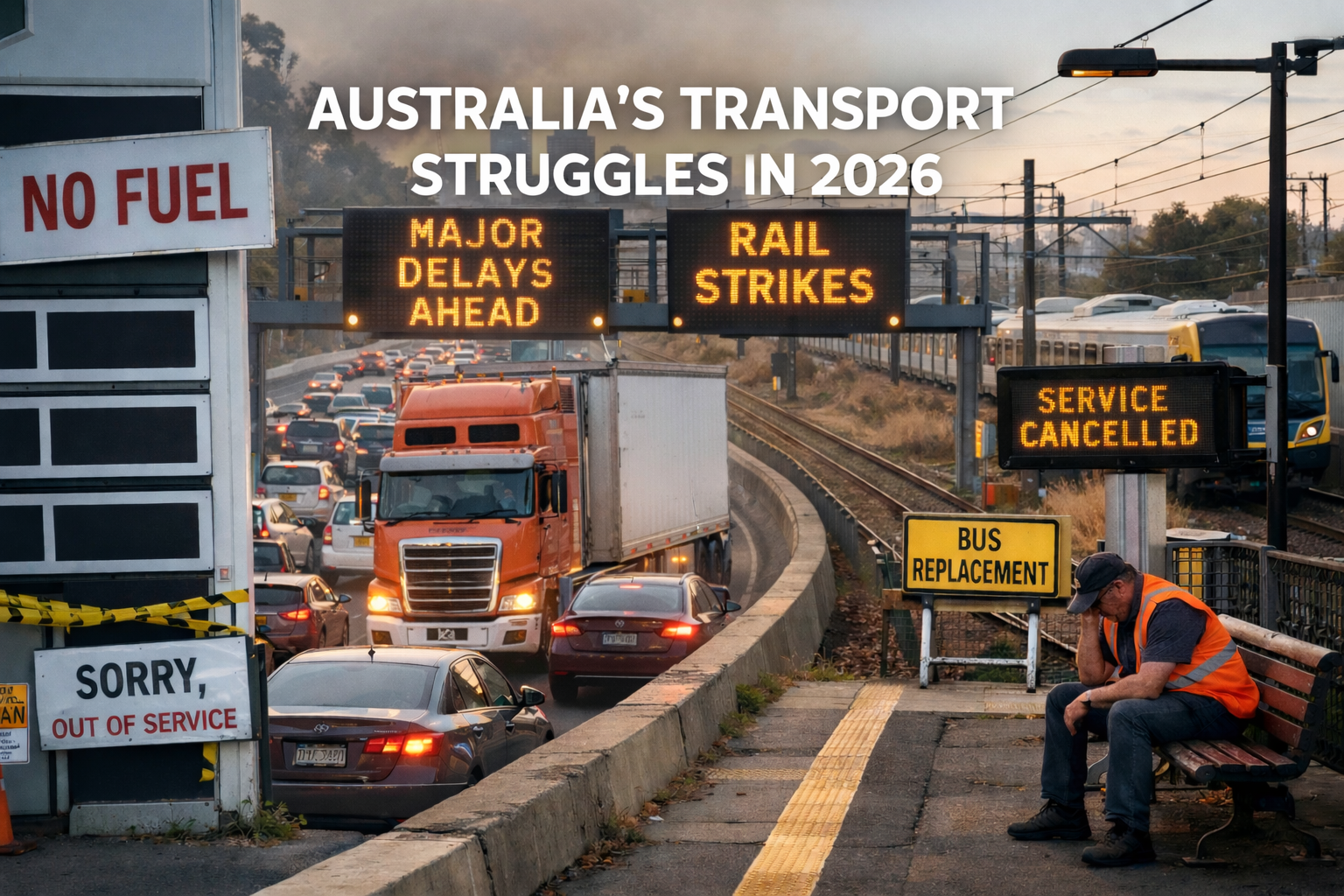
Hey there, if you’re in logistics or just curious about how Australia keeps its vast distances moving, 2026 is shaping up to be a bumpy ride for the transport sector. From labor woes to green pressures, let’s chat about the top challenges in a straightforward way- like we’re grabbing coffee and breaking it down.
Labor Shortages and Rising Costs
Australia’s transport industry is hurting from ongoing worker shortages, especially truck drivers and warehouse staff. Wages are climbing fast to attract talent, squeezing profit margins in an already tight economy.
This isn’t new, but with population growth and e-commerce booming, it’s hitting harder—think delayed deliveries and higher prices for everyone.
Infrastructure Bottlenecks
Our cities like Sydney are bursting at the seams with outdated roads and sky-high land costs for new builds.
Power grid delays—up to 18 months for new sites—stem from data centers hogging capacity, stalling warehouse expansions.
Melbourne’s looking more attractive for investments, but congestion from urbanization is slowing freight everywhere.
Fuel and Decarbonization Pressures
Fuel prices are volatile thanks to global tensions and new emissions rules like Scope 3 tracking.
Shifting to electric or hydrogen trucks sounds great, but upfront costs and limited charging infrastructure make it tough for small operators.
The government’s 2025 Freight Strategy pushes decarbonization, but many firms are stuck balancing compliance with staying afloat.
Geopolitical and Supply Chain Risks
Global uncertainties—like trade disruptions—are making routes unpredictable and costs unpredictable.
With reliance on imports, Aussie logistics leaders worry about empty kilometers and dwell times spiking.
Resilience tactics, like dual ports, help but add complexity under Chain of Responsibility laws.
Tech Hype vs. Reality
AI promises efficiency in routing and automation, but overhyping it risks disrupting operations without quick wins.
Route inefficiencies across our massive geography eat into profits, and not every company can afford smart tech yet.
Balancing AI chatbots with customer service is key—too much automation, and you lose the human touch.
Traffic Overload and Urban Squeeze
Roads built decades ago can’t handle today’s traffic boom from population growth (nearly 1% yearly).
Last-mile delivery in crowded cities means more fuel burn and wear on vehicles.
Smarter systems are emerging, but they need government-business teamwork that’s often slow to gel.
Wrapping this up conversationally: Australia’s transport pros are resilient, but 2026 demands smart investments tied to real outcomes like on-time deliveries and lower emissions. What’s your take- seen these headaches firsthand?