G’day, transport bosses! Electric trucks and vans aren’t “someday” anymore-governments are tightening emissions rules, and customers are asking what you’re doing about carbon. If you run a fleet and ignore EVs, you’ll feel it in lost tenders, higher costs, and compliance headaches. The good news? If you start planning now, you can turn these mandates into a profit and reputation win.
1. Understand What’s Coming
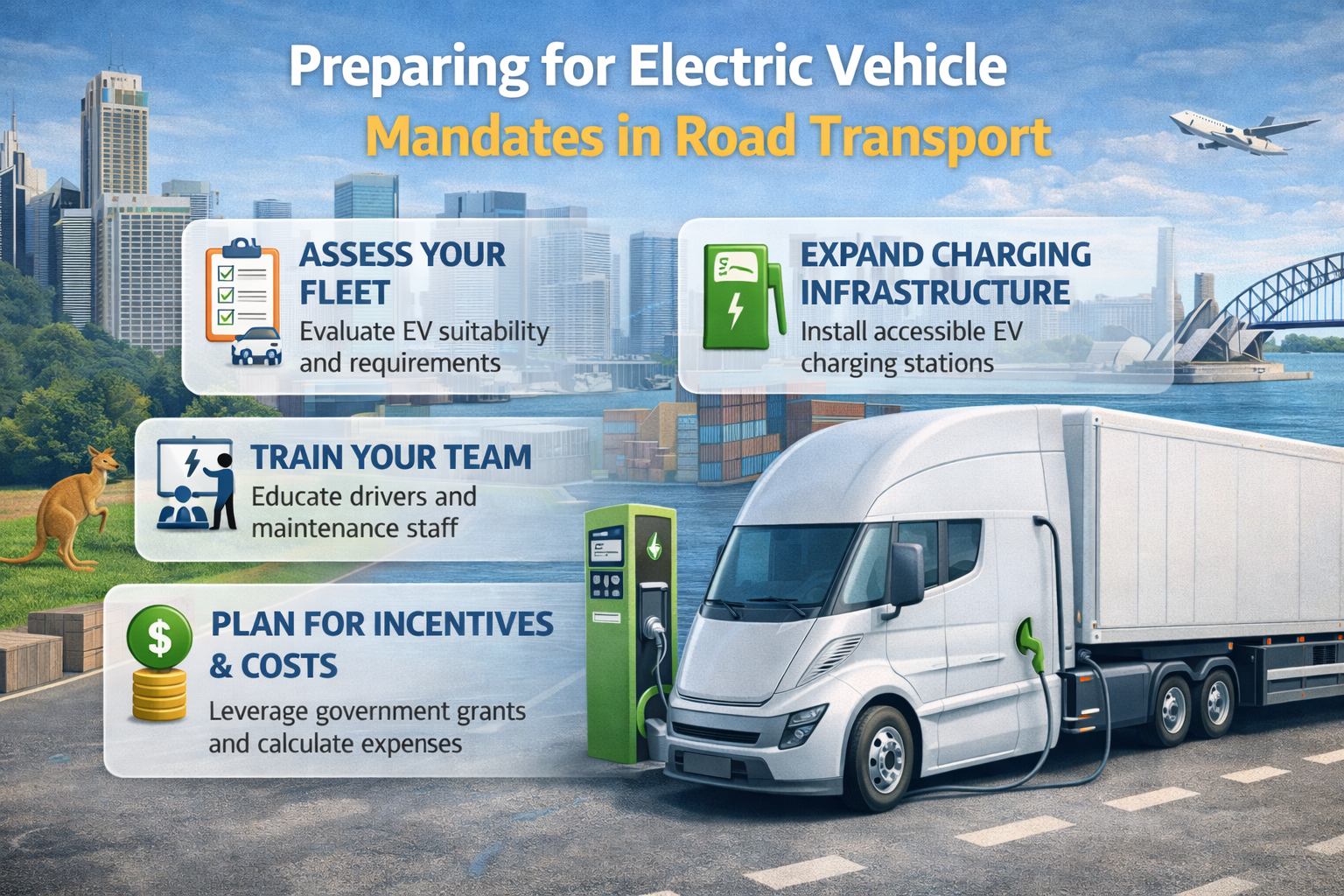
First, you need clarity, not panic. EV mandates usually don’t ban diesel overnight-they phase in targets like “X% of new vehicles must be low or zero emission” or push strict emissions standards that make high-polluting vehicles expensive to run. That means your old trucks won’t vanish, but buying more of the same will get harder and costlier. Spend a day mapping out which rules affect you: emissions standards, EV incentives, road-user charges, and safety rules around EVs.
2. Start With Your Easiest Routes
You don’t need to electrify the whole fleet on day one. Start with “low hanging fruit”:
- Short, predictable urban routes (metro deliveries, shuttle runs).
- Vehicles that return to the same depot every night (easy overnight charging).
- Older units due for replacement in the next 12-24 months.
This lets you learn charging, driver training, and maintenance on a small scale while still running diesel where it makes sense.
3. Build a Charging Plan, Not Just Buy EVs
The biggest mistake fleets make is buying EVs without thinking about plugs. Ask yourself:
- Where will vehicles park for 6-8 hours? (Ideal for depot overnight charging.)
- Do you really need fast DC chargers for every truck, or will slower AC chargers cover most work?
- Can you stagger charging times to avoid smashing your electricity bill at peak hours?
Work with an electrician or energy consultant early. A simple, well-designed depot setup is often cheaper than you think and future-proofs you as more EVs arrive.
4. Crunch the Total Cost, Not Just the Sticker Price
EVs often cost more upfront but less over their lifetime. When you compare, look at:
- Fuel vs electricity per kilometre.
- Maintenance (no oil changes, fewer moving parts).
- Tax breaks, rebates, or fringe-benefit-style savings.
- Upcoming emission charges or penalties on high-emitting vehicles.
When you put all of that into a 5-7 year view, many fleets find EVs already match or beat diesel on cost for the right routes.
5. Prepare Your People
Drivers and workshop crews can make or break your transition. Keep it simple and practical:
- Train drivers on regenerative braking, charge planning, and EV safety.
- Train technicians on high-voltage safety and basic diagnostics.
- Be honest about change: reassure staff that EVs are tools, not threats to their jobs.
If drivers feel confident instead of scared, they’ll help you find new efficiencies you didn’t even plan for.
6. Use Data to Prove What Works
Telematics and route data are your best mates in EV planning. Use them to:
- Identify routes with suitable range and dwell times.
- Track real-world energy use, not brochure promises.
- Show customers and management hard numbers: emissions cut, fuel saved, downtime reduced.
Those numbers will help you win greener contracts and justify more EV investment.
7. Talk to Customers About Sustainability
Don’t treat EVs as just a compliance box—sell them as a value-add. Many shippers, retailers, and corporates now care about Scope 3 emissions and will pay more or choose you over a rival if you help them hit their climate targets. Put your EV story in your proposals: “X% of deliveries on this lane will be zero-emission by 2027” sounds very attractive when tenders are evaluated.
8. Make a 3-5 Year Transition Roadmap
Instead of panicking each time a new rule drops, build a simple roadmap:
- Year 1: Pilot EVs on 1–2 depots, install basic charging, train core staff.
- Years 2-3: Expand to more routes, standardise specs, integrate EV data into your TMS/telematics.
- Years 4-5: Replace a set percentage of end-of-life diesels with EVs each year.
Review the plan annually as technology, incentives, and regulations shift.