For Australian businesses, logistics can feel like a game of chance. You need to move a pallet of goods, a new piece of machinery, or a regular supply of stock, and the quotes you get seem to change faster than the weather.
At Bali Solutions, we believe in transparent pricing and efficient service. To help you get a better handle on your budget, we’ve broken down the five biggest traps that drive up bulk freight costs—and how a savvy shipper can avoid them.
1. The Cubic Weight Trap
This is the big one that catches most people out. Your freight partner doesn’t just charge you based on the actual weight of your goods; they charge based on the Volumetric Weight (or Cubic Weight) if it’s higher.
The Trap: Sending something big and light (like foam insulation or bulky packaging) often costs more than something small and dense (like metal parts). If your goods take up a huge chunk of truck space without hitting the weight limit, you pay for the space.
The Fix: Optimise your packaging. Consolidate smaller items, use custom packaging to eliminate air pockets, and compress goods safely where possible. Less air equals less money spent.
2. The Loading/Unloading Headache (Accessorial Fees)
The quote you receive often assumes a perfect scenario: a loading dock and a forklift ready at both ends. When the reality hits—a residential street, a narrow construction site, or a manual hand-load—you get hit with “Accessorial Fees.”
The Trap: Extra charges for things like liftgates, manual labour, waiting time (demurrage), or delivery to a site that needs an appointment.
The Fix: Be brutally honest upfront. If you know the delivery spot is tricky, tell us. If you need a specific vehicle—like our Crane Truck for precise placement—book it in advance. Clarity eliminates surprises, which are usually expensive surprises.
3. The Urgency Tax
Need it tomorrow? You’ll pay for it. Freight logistics works best with time and planning. When you need an urgent, last-minute slot, the provider often has to shuffle routes or pull a driver off another scheduled job, which they will charge a premium for.
The Trap: Relying on “urgent” or “express” for standard freight pushes rates up significantly.
The Fix: Plan ahead and communicate. For recurring shipments, set up a regular schedule. For one-off bulk jobs, give your logistics partner as much lead time as possible (we recommend a few days buffer) to secure the best rate.
4. The Regional vs. Metro Mirage
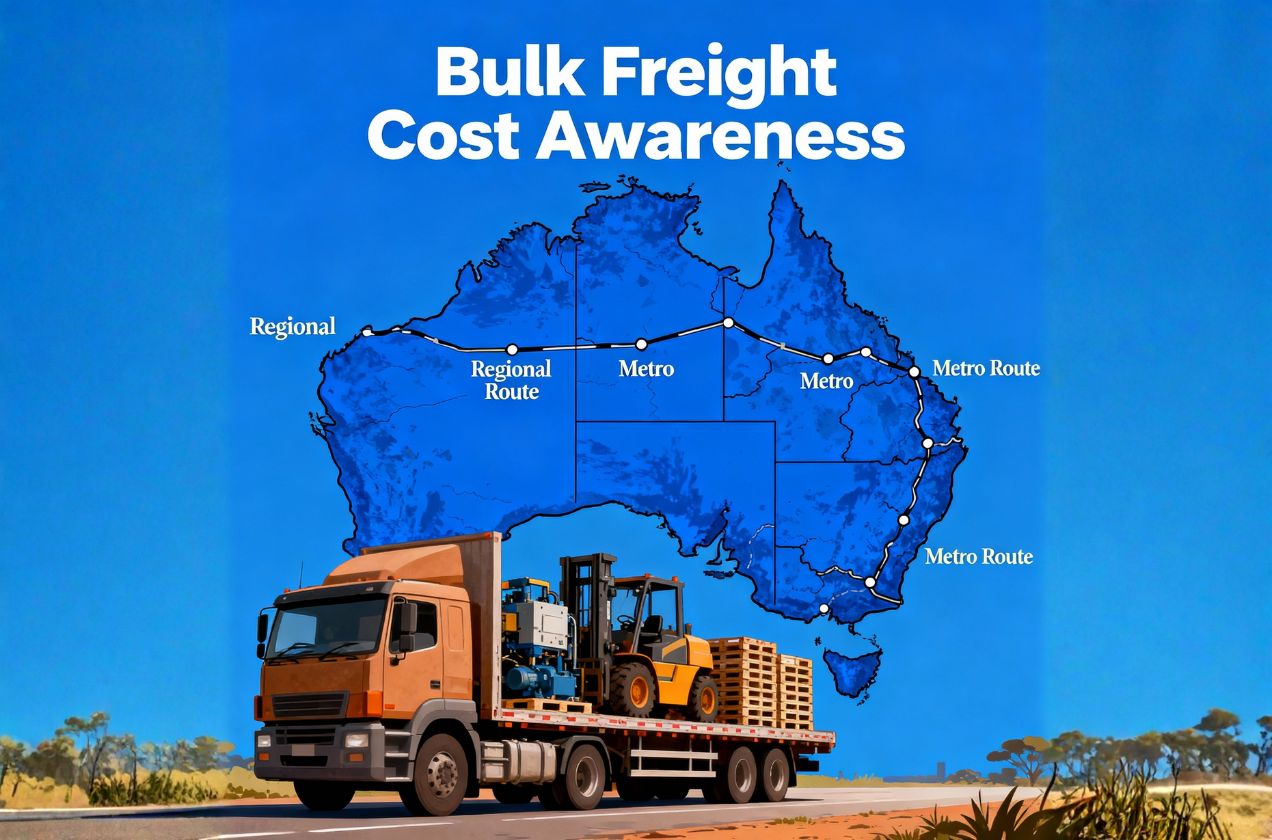
Australia is huge. While major carriers offer competitive rates between capital cities, the cost explodes when you go off the main highway, particularly for regional or remote areas.
The Trap: Assuming your rate from Sydney to Newcastle is the same as Sydney to Broken Hill. Longer distances, poor road infrastructure, and lower delivery frequency into regional hubs cost carriers more, and that’s reflected in your price.
The Fix: Consolidate regional shipments. Instead of sending five small loads over five weeks, send one bulk load. Our wide coverage commitment means we are built for regional routes, but consolidating your freight gives us better efficiency to pass savings back to you.
5. The “I Can Get Cheaper” Mindset
This one might sound odd, but focusing only on the lowest price often leads to hidden costs down the line. A bargain-basement quote usually means cuts in crucial areas: insurance, driver training, vehicle maintenance, or real-time tracking.
The Trap: Choosing the cheapest quote and ending up with late delivery, damaged goods, or zero customer service when things go wrong.
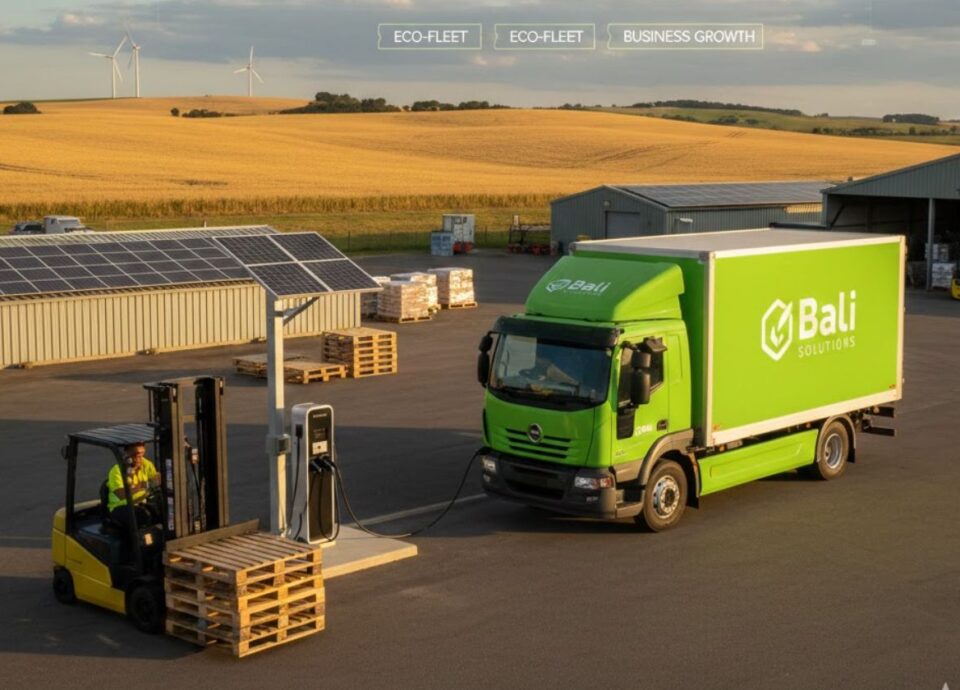
The Fix: Choose value, reliability, and security. A slightly higher quote from a trusted, professional partner like Bali Solutions (who guarantees damage-free, on-time delivery with an eco-friendly fleet) protects your goods, your reputation, and your sanity. You save more money by avoiding one single ruined shipment than you ever would by chasing the lowest price.
Ready to get reliable, transparent bulk freight quotes without the hidden traps? We can help you book your next bulk or furniture delivery with confidence.